The Mafia, the Vatican and a secret Masonic society have all been implicated in the murder of ‘God’s Banker’ Roberto Calvi.
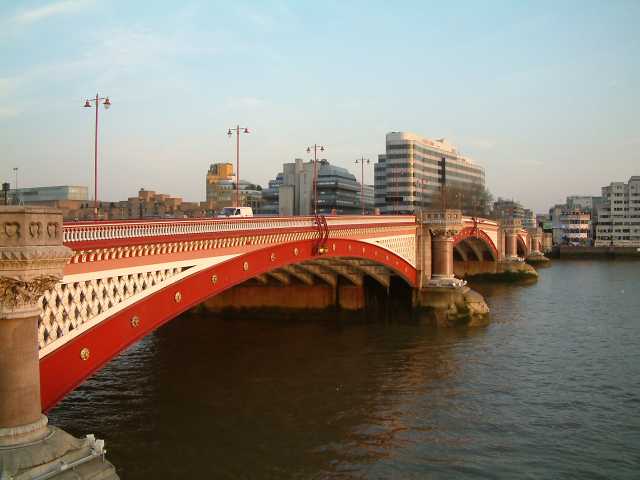
A passerby on his way to work spotted the 62 year-old financier hanging from London’s Blackfriars Bridge at 7.30am on Friday 18 June, 1982.
Calvi was suspended from scaffolding above the Thames, an orange rope tied in a lover’s knot around his neck. Building bricks had been placed in his pockets to weigh him down along with around £7,500 in cash.
At first the City of London police believed his death was a suicide.
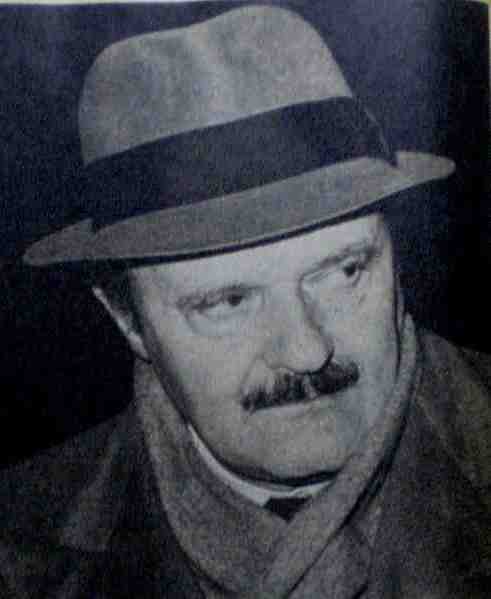
Roberto Calvi
Three years earlier Calvi, the Chairman of the Catholic Banco Ambrosiano in Milan, had tried to kill himself while in prison awaiting trial for violating Italy’s currency laws.
Calvi was given a suspended sentence in 1981 and kept his position as Chairman but a year later an £800m black hole was found in the accounts.
On 5 June 1982, Calvi wrote a letter to Pope John Paul II asking him to intervene to prevent ‘a catastrophe of unimaginable proportions in which the Church will suffer the gravest damage.’
Four days later he deserted his post and his apartment in Rome and fled to Venice. After shaving off his moustache he took a private plane to London.
The inquest in July 1982 ruled it was suicide but the decision was overturned after the Calvi family employed George Carman QC to argue their case. In July 1983 an open verdict was returned.
Since that date investigations have revealed evidence that Mr Calvi was assassinated to prevent him implicating major figures in Italy in the collapse of Banco Ambrosiano.
A year before his death, Calvi’s name had been discovered on a list of members of a Masonic Lodge known as Propaganda Due or P2, alongside two Cabinet ministers, 48 MPs and the heads of all three intelligence agencies.
Another name for P2 was the ‘frati neri’ or ‘black friars’.
Blackfriars Bridge
The ‘grand master’ of P2, Licio Gelli, was later jailed for the Banco Ambrosiano fraud, which also affected its main shareholders, the Vatican Bank.
In 1991 an informer claimed that Calvi was killed on the orders of Licio Gelli and Sicilian mafia boss Giuseppe Calo, partly as punishment for embezzling money owed to P2 and the mafia.
Seven years later, during a reinvestigation by Italian police, Calvi’s body was exhumed. This time it was concluded that he had in fact been murdered. Injuries to his neck were inconsistent with hanging and there was no rust or paint on his shoes to back up the theory he had climbed onto the bridge scaffolding to hang himself.
Although Gelli did not stand trial, prosecutors brought charges against Giuseppe Calo, gangsters Flavio Carboni and Ernesto Diotallevi, Carboni’s ex-girlfriend Manuela Kleinszig and Calvi’s former driver and bodyguard Silvano Vittor.
The trial in Rome began on October 5, 2005, but after 20 months of evidence all five were cleared of murder after the judge decided there was insufficient evidence.
Despite the acquittals, it has now been accepted by City of London police that Calvi was murdered. But by whom? ___________________
Estate agent Suzy Lamplugh was 25 when she disappeared without trace on July 28, 1986.
Her white Ford Fiesta was found that night outside a house for sale in Stevenage Road, Fulham. Her purse was in the car but the key was missing.
She had recorded her last appointment in her office diary – ”12.45 Mr Kipper – 37 Shorrolds Road O/S” – meaning she would meet the client outside the address.
Suzy’s body has never been found but she was declared dead in 1994 and the investigation remains open.
Several suspects have been put forward: Convicted killer John Cannan, who is said to have had the prison nickname ”Kipper” and was living in a hostel after serving an eight year sentence for rape; Ipswich serial killer Steve Wright, who worked on the QE2 at the same time as Lamplugh in 1982; and Michael Sams, who kidnapped an estate agent in Birmingham in 1992.
Cannan’s former girlfriend Gilly Paige claimed that he confessed to raping and killing the estate agent as they drove past Norton Barracks in Worcestershire. Searches of that area and others suggested to police were fruitless.
In November 2002 Scotland Yard said that Cannan was ”the only suspect” but there was not enough evidence to charge him with the murder. He was then serving a 35-year minimum term life sentence for the abduction, rape and murder of 29-year-old newlywed Shirley Banks in Bristol in 1987.
Speaking in 2006, Detective Superintendent Jim Dickie said there was evidence Cannan had been monitoring Suzy before her disappearance.
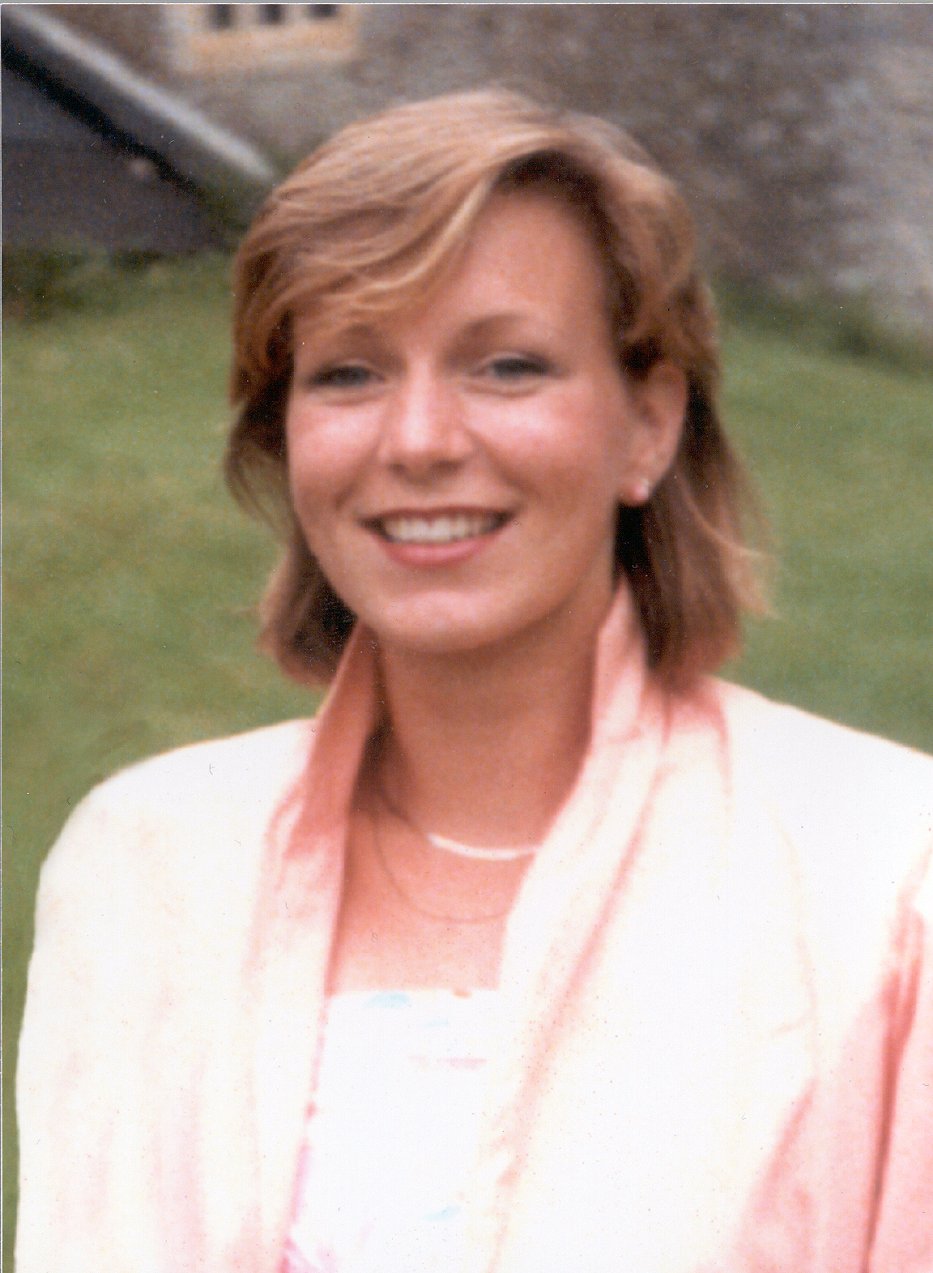
Suzy Lamplugh
The Metropolitan Police apologised publicly to Miss Lamplugh’s parents for faults in the original investigation, including a failure to follow up information from significant witnesses.
A driver of a black cab, who later positively identified Cannan, told police he took a man carrying a bottle of champagne to Shorrolds Road on that day in 1986. Witnesses also claimed to have seen a blonde woman arguing with a man in a black BMW in the area.
Deputy Assistant Commissioner Bill Griffiths said “It is a matter of great regret for all of us at the Metropolitan Police that significant opportunities were missed during the original inquiry.”
Police continued to investigate the case and in 2018 and 2019 searched property owned by Cannan’s mother in the West Midlands and open land in Worcestershire. No evidence was found.
A potential new lead was received in August 2019 when a witness reported seeing a man, disposing of a large bag in the Grand Union Canal in July 1986. However officers discovered that the part of the canal mentioned by the witness and the surrounding canal stretches had been extensively searched by the Met’s Marine Support Unit and London Fire Brigade Search Unit in September 2014 during an unrelated homicide investigation. That search did not reveal any items connected to the Suzy Lamplugh investigation.
In March 2021 the Metropolitan Police said it remained a “significant case” and that the investigation was ongoing.
We would urge anyone who believes they might know something about what happened to Suzy all those years ago to come forward. Whether you saw something that you thought was unconnected at the time, or you felt under pressure to protect someone you knew – it is not too late. The passage of time has not weakened our determination to seek justice and get the answers that the Lamplugh family continue to wait for. They have always been supportive of our efforts to make progress in the investigation, and they have shown remarkable strength despite the immense sadness they have endured over the years.
Detective Chief Inspector Rebecca Reeves, the senior investigating officer
Cannan died at HMP Full Sutton on 6 November 2024.
Suzy’s mother Diana Lamplugh set up the Suzy Lamplugh Trust in December 1986 to ”highlight the risks people face and to offer advice, action and support to minimise those risks.”
Diana received an OBE in 1992 but sadly died in August 2011 without seeing anyone brought to justice for her daughter”s murder.
She once told how Suzy had rung her the day before her disappearance. “She was all bubbly, telling me how she was doing this and that. I said, ‘Be careful, darling’. She replied: ‘No, life’s for living, mummy’. And I think she was right.”
________
Sources and further information:
The website of the Suzy Lamplugh Trust, which celebrated its 25th anniversary in 2011.
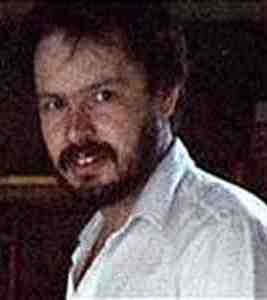
The murder of private investigator Daniel Morgan remains one of London’s most notorious unsolved cases.
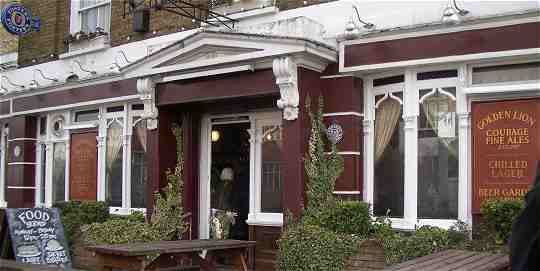
On March 10, 1987, the 37 year-old father-of-two was hacked to death with an axe outside the Golden Lion pub in Sydenham.
Why was he killed? His family, including brother Alastair, are convinced that Daniel was close to exposing a group of corrupt police officers, but six investigations have failed to provide a conclusive answer or bring his killers to justice.
Daniel Morgan
Daniel Morgan ran a detective agency called Southern Investigations. The night he was killed he had a 90-minute meeting with his business partner Jonathan Rees at the Golden Lion. At 9pm he left by a back entrance to get to the car park, a Rolex watch on his wrist and £1,100 in his pocket.
He was later found lying on the ground near his car with an axe embedded in the side of his head. The Rolex was missing but the cash remained.
The following month Rees, his brothers in law Garry and Glenn Vian, and Sid Fillery, one of the Catford police station detectives initially assigned to the case, were arrested, only to be released without charge.
At the inquest in April 1988, the bookkeeper at Southern Investigations alleged that Rees and Fillery planned the contract killing. By this time Fillery had retired from the police, and in 1989 he joined Southern Investigations as Rees’ new partner.
The pair went on to carry out work for a number of tabloid newspapers including the News of the World and are said to have provided the information for exposes of celebrities, politicans and royalty.
A second inquiry by Hampshire Police began on 24 June 1988 following a complaint by the Morgan family to Home Secretary Douglas Hurd. Rees was again arrested, but the charges were dropped.
Between June 1998 and May 1999 police monitored the offices of Southern Investigations as part of a third investigation. Although it did not assist the murder enquiry, it did provide evidence that Rees was in a plot to frame model Kim James with drugs to help her husband win custody of their son. In December 2000 he was jailed for six years at the Old Bailey for conspiracy to pervert the course of justice.
A fourth investigation began in 2002 but a year later the Crown Prosecution Service decided not to go ahead with a case against Rees and two others on the grounds of insufficient evidence.
Another flawed attempt began in 2006. Two years later Rees, Garry Vian, Glenn Vian and James Cook were charged with murder and Sidney Fillery was charged with perverting the course of justice.
It was expected the trial would take place in April 2009. Two years of legal wrangling over disclosure of evidence and police handling of witnesses followed. In February 2010 a judge stopped the case against Sidney Fillery after excluding the evidence of a key witness. The charges against Cook were dropped in November. The entire case collapsed in March 2011 after prosecutors accepted they could no longer guarantee that full disclosure of evidence could be made to the defence.
The Metropolitan Police have since admitted that the original investigation in 1987 was tainted by police corruption, without giving any details of that corruption.
Alastair Morgan commented at the end of the case: “We have encountered stubborn obstruction and worse at the highest levels of the Metropolitan police. We have found an impotent police complaints system, and we have met with inertia or worse on the part of successive governments. We have been failed utterly by all of the institutions designed to protect us.”
On 10 May 2013 the Home Secretary Theresa May announced an independent panel would look into the circumstances of the case.
The remit of the panel involved addressing questions related to “police involvement in the murder, the role played by police corruption in protecting those responsible for the murder from being brought to justice and the failure to confront that corruption, the incidence of connections between private investigators, police officers and journalists at the News of the World and other parts of the media and alleged corruption involved in the linkages between them.”
Eight years later, on 15 June 2021, the panel’s report was finally published. It found that the Metropolitan Police’s failure to properly investigate the case and its attempt to cover up its failings amounted to “a form of institutional corruption”. It also criticised Met Commissioner Cressida Dick over delays in providing documents to the panel and raised concerns about links between police officers, “individuals linked to crime” and newspapers, particularly the News of the World (which was a major client of Southern Investigations between 1987 and 1989). The panel concluded that the Met Police never seriously investigated the theory that Morgan was murdered because he was about to expose police corruption.
The family of Daniel Morgan has suffered grievously as a consequence of the failure to bring his murderer or murderers to justice, the unwarranted assurances which they were given, the misinformation which was put into the public domain, and the denial of the failings in investigation, including failing to acknowledge professional incompetence, individuals’ venal behaviour, and managerial and organisational failures.
Statement of the Panel issued by Baroness Nuala O’Loan
In July 2023, the Metropolitan Police Commissioner Sir Mark Rowley issued an apology to the family of Daniel Morgan after agreeing to settle a civil claim and make an admission of liability in respect of the conduct of his officers in response to the murder.
I unequivocally and unreservedly apologise for the failure of the Metropolitan Police Service to bring those responsible for the murder of Daniel Morgan to justice. From the earliest stages, his family have been repeatedly and inexcusably let down by the Metropolitan Police. This case has been marred by a cycle of corruption, professional incompetence, and defensiveness that has repeated itself over and over again. Daniel Morgan’s family were given empty promises and false hope as successive investigations failed and the Metropolitan Police prioritised its reputation at the expense of transparency and effectiveness.
Sir Mark Rowley
The Met Police said that “there still remains a possibility of solving this murder” and confirmed it was still carrying out a forensic review of exhibits linked to the case in the hope that advances in DNA and forensic technology might recover new evidence.
A £50,000 reward is on offer for information leading to the conviction of those responsible for the murder. Contact police on 0203 276 7816 or Crimestoppers on 0800 555 111.
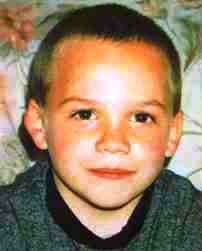
Seaman, Dixon, Linighan, Adams, Winterburn, Merson, Davis, Jensen, Parlour, Campbell, Wright… It was the summer of 1993, and seven year-old Sean Williams could name every player in that FA Cup winning football team. He loved the Arsenal, he loved his BMX bike, and he loved life. He was a popular…
You must be a paid subscriber to view this page - we rely on donations to keep the website going.
For £7 a year, subscribers receive the following benefits:
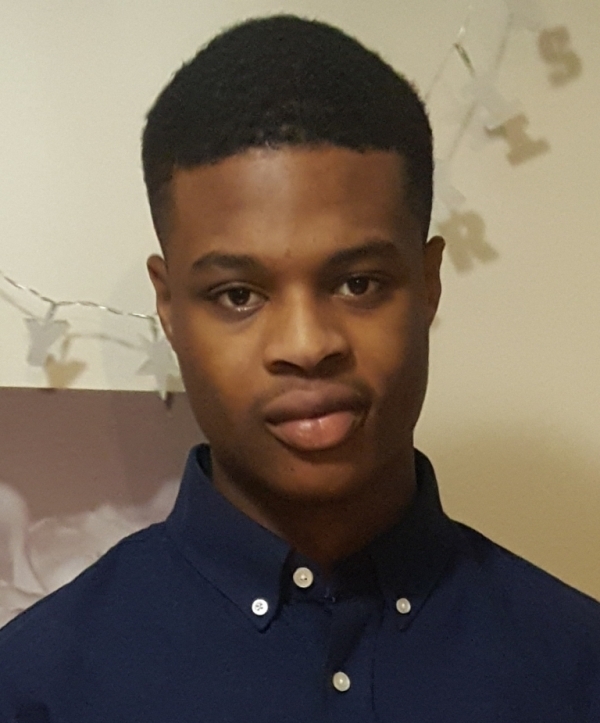
Experts decided a teenage student died of natural causes rather than as a result of any assault – but his family say there are unanswered questions. Oluwadamilola ‘Dami’ Odeyingbo was 18 when he collapsed in a garden in Chislehurst on 9 January 2018. Police were called to the scene in…
You must be a paid subscriber to view this page - we rely on donations to keep the website going.
For £7 a year, subscribers receive the following benefits: