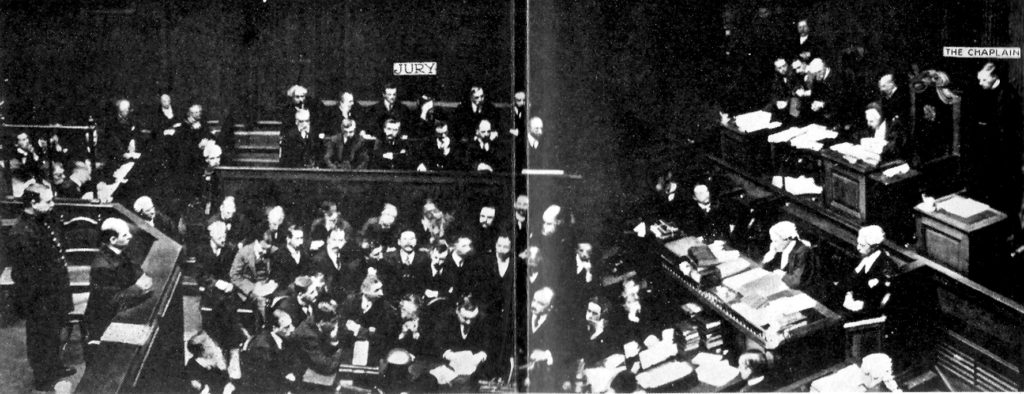
Local newspapers may not have the staff or resources to cover a trial in depth and the national press, TV and radio are naturally interested only in the most important or topical cases. Most court reports in the media will either be the start of a case (the prosecution opening, a summary of the evidence against a suspect) or the end (conviction and sentence).
But what about the witness evidence and the defence? Juries make their decisions based on all the evidence put before them (or at least they are supposed to do so), not the summaries provided by the prosecution, the defence or the media. If the public do not hear all the evidence (or at least the most important parts of it), it is perhaps not surprising that some jury verdicts are greeted with dismay (or even anger).
That is why we want to fully report a murder trial from start to finish to give the public a better idea of what happens in court. It will not be a verbatim transcript with ever umm and err – that would take too long to read, let alone write up – but it will be an in depth report of what happened with the most important parts quoted as accurately as possible.
Most murder trials last between two to three weeks. Sending a reporter to cover one trial all day would potentially cost (depending on the reporter or their employer) between £70 and £200 per day. We have therefore set a rough minimum of £950 to support full coverage of a short trial. If possible, the case chosen will be one that would otherwise receive very little coverage at all.
If the target is met, we will commit to providing daily coverage on the blog. All donors will also receive a long-read summary of the entire case upon its conclusion and an option to take part in consultation on the next project.
All of the above will be subject to legal restrictions such as the Contempt of Court Act and the Youth Justice and Criminal Evidence Act, for example. Explanation of the effect of these will, if possible, be provided.
Donations can be made via paypal to mailbox@murdermap.co.uk. Please email us at mailbox@murdermap.co.uk if you would like to fund this project or require further information.
Unfortunately parts of the old murdermap website will disappear this week after nearly nine years’ service.
The main reason for this decision is that the site was based on a content management system (created by the original developers) that is no longer being supported.
Regular users will also have noticed that the map stopped working properly after Google brought in its new pricing plan in July 2018 and effectively ended the free Maps API service.
The choices were, therefore, leave the website up to deteriorate until it goes down completely (or, worse, gets hacked), or replace it.
Sadly it is also clear that the site is no longer sustainable in terms of time and resources. There are many reasons for this, but in reality the project was hamstrung from the start because it was based on the (unrealistic) idea that it could be funded by online advertising. It has only ever earned enough money to pay for hosting fees and most of the time the site has been maintained by one court reporter (although the information it contains is based on the work of many other people).
So what next?
Since murdermap began in 2010, the site’s database has grown to include more than 1,600 victims of homicide (including both murder and manslaughter, mostly for the years 2008-2018).
This database will not be lost. It has been saved offline and is likely to return in a different form at some point. And most of the original webpages have already been archived on the Wayback Machine.
After the original site comes down, it will be replaced by the murdermap blog while other avenues are explored. Crowdfunding may be difficult because running a site like this properly, with in-depth reporting of each murder in London, would require significant annual investment (see the Homicide Watch website in Washington DC for one example). Likewise turning murdermap into a subscriber-only site might be self-defeating, given that it was originally set up with the aim of publicly and openly tracking each and every murder – not just the high-profile cases that already attract media attention – to reveal the stories behind the crime statistics.
While murdermap had many frustrating flaws from the very start, hopefully this site has helped to inform the debate around violent crime in London. And even if murdermap disappears completely, in recent years there has been a greater focus on homicides and violent crime in London. During 2018 several national newspapers maintained lists of homicide victims in the capital and produced in-depth articles using maps and charts (one example being The Guardian). The Office for National Statistics is also providing a lot more detail about homicides than it did ten years ago. Long may this continue.
The Metropolitan Police unit responsible for investigating murders* in London was cut by nearly 40 per cent between 2004 and 2017 (see table below).
Figures obtained via a Freedom of Information request show the Homicide and Serious Crime Command (HSCC) reduced in total strength almost every year over that period. The sharpest fall was from 2011 onwards.
The number of Major Investigation Teams (MIT), which are responisble for investigating homicide cases*, has also decreased from 26 to 18 since 2011.
While the total number of homicides fell by 50 per cent between 2004 and 2014, there were significant increases in 2015 and 2017 (according to Metropolitan Police figures).
There are likely to be around 150 homicides in 2018, although recent months have seen lower figures than at the start of the year, possibly because of the police response since.
Although there are many possible causes for the increase in violent crime since 2014, cuts to police budgets (and public services in general) across England and Wales may well have released the pressure or created some kind of “tipping point”.
The figures also show that the HSCC is now increasing in strength, with the figures for 2018 returning to a level last seen in 2013.
NOTES: The figures provided for “strength” (in response to the request for the “number of officers and staff”) were not whole numbers and have been rounded up or down accordingly.
*The Homicide and Serious Crime Command does not just investigate murder. It also takes on (for example) high profile crimes, “critical incidents”, serial stranger rapes, work-related deaths, unexplained deaths, and high risk missing persons enquiries.
The figures cover a period involving at least two structural reorganisations of the Met. For 2004 and 2005 the figures given are the total for the units designated SCD1(2), SCD1(3), and SCD(4). For 2006 to 2012 they are for SCD1. For 2013 to 2018 they are for SCO1.
The total “strength” given for the MITs (not included in table) usually accounts for around three-quarters of the total “strength” of the HSCC.
Although the FOIA request was for 2003 onwards, no figures were provided for 2003, when there were more than 200 homicides (various figures have been given ranging between 204 and 216).
Table: Strength of the Homicide and Serious Crime Command (or equivalent) 2004 to 2018
The case of 18 year-old Oluwadamilola Odeyingbo has been removed from the database after the Metropolitan Police concluded it was not a homicide.
Their decision was taken after a special post-mortem gave a cause of death as multiple organ failure from a pre-existing medical condition.
The police statement reads:
The cause of death has been established for an 18-year-old man who died in Chislehurst in January.
Oluwadamilola Odeyingbo, 18, died in hospital on the morning of 10 January 2018 from injuries sustained following a reported altercation in Empress Drive just after 21:00hrs the previous evening.
A post-mortem examination conducted on 12 January failed to establish a cause of death. A special post-mortem has now concluded gave a cause of death as multiple organ failure from a pre-existing medical condition.
Officers from the Met’s Homicide and Major Crime Command, having consulted with the CPS, are satisfied that no offences of murder or manslaughter have been committed.
There are ongoing enquiries in relation to other offences not linked to the death of Mr Odeyingbo.
Here is our original case summary for the record:
Oluwadamilola Odeyingbo, 18, died after being assaulted in Chislehurst.
He was found collapsed in a garden in Empress Drive at around 9pm on 9 January 2018.
Mr Odeyingbo died in hospital the next morning.
An 18-year-old man was arrested on suspicion of murder on 10 January before being released on bail.
Detective Chief Inspector Tim Wright, said: “We understand that neighbours and people passing through the area witnessed the incident on Tuesday evening. We are keen to speak to all witnesses and would encourage them to come forward as soon as possible.
“A young man has lost his life and we are doing everything we can to piece together what took place.”
Anyone with information concerning this incident is asked to call the incident room on 020 8721 4961 – you can also tweet @MetCC. Alternatively, contact Crimestoppers anonymously via 0800 555 111.
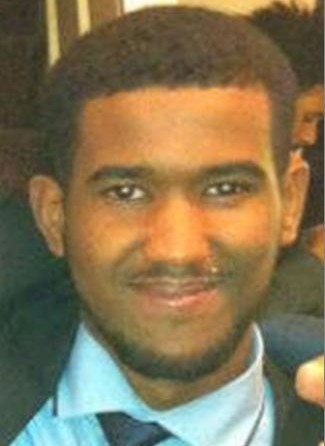
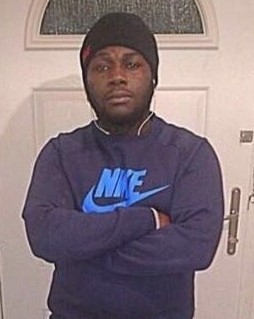
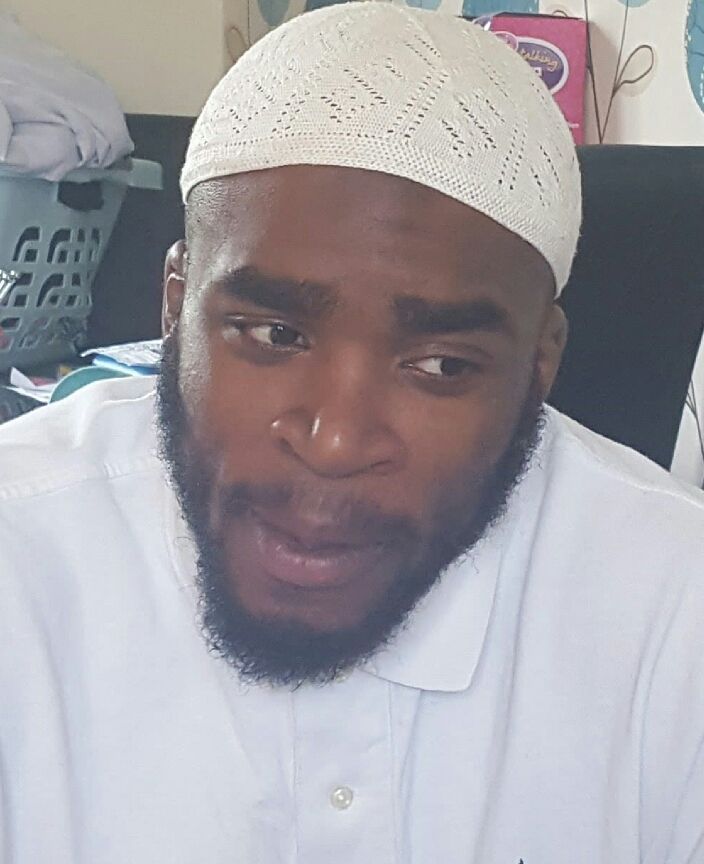
These 14 murders in London in 2016 remain unsolved*. Can you help?
Abdi GutaleAndrew Oteng-OwusuDavid RobinsonHarjit Singh-DulaiKacper LatuszekLewis ElwinMatthew KitandweMohammed KakayZiggy Worrell-OwusuRukevwe Tadafe Jordan BariMohammed HassanJames Owusu-AgyekumJunior George Nelson
Harjit Singh Dulai, 44, was stabbed to death after meeting a drug dealer in Rosedale Park off Albion Road in Hayes at around 6.40pm on 27 January 2016. A 16 year-old boy was acquitted of murder in July 2016 but police continue to appeal for information. Call Crimestoppers on 0800 555 111.
The skeletal remains of Junior George Nelson, 52, from Kilburn, were discovered on an overgrown embankment in Rabournmead Drive, Northolt, on 13 March 2016.
It is not known how long his body had been there and a postmortem examination was unable to ascertain a cause of death.
Junior was last seen alive at his home in Aldershot Road, Kilburn, at around noon on 15 August 2015. Police believe he travelled towards Wembley that afternoon, which was “not a usual journey he would take.”
Analysis of mobile phone data show that his phone was used in the Stonebridge Park area of Wembley at around 10pm. His phone has never been recovered.
Junior was reported missing on 21 August.
Junior Nelson
Detectives said that they believed his death was connected to the supply of drugs, and that before his death he was being taken advantage of by those involved in drug dealing in the area.
During a renewed public appeal in 2025, the independent charity Crimestoppers offered a £20,000 reward for information leading to a conviction.
Four people have been arrested during the investigation but all were released without charge.
Detective Constable Iain McDonald said: “We remain committed to finding those responsible for Junior’s death but need the public’s help. There are people amongst the community, in particularly the Kilburn area, who know what happened to Junior.
“A lot can happen in ten years. Allegiances can change and maybe you felt unable to talk to us at the time, for whatever reason, but you are now in a position to do so. Now is the time to come forward.
“We understand that those with information may be concerned, but I would urge anyone who can help to come forward and help give Junior’s family the justice they deserve.
“A substantial reward is available from Crimestoppers, who are a charity, independent of to the police. – They will not ask for your personal details when you contact them, just for any information that could help identify who is responsible for Junior’s murder. To qualify for this reward, you must provide information directly to them.
“You can also speak to our investigation team. Any information you have, no matter how small, could be significant and will be treated with the strictest confidence.”
To provide information anonymously, and claim the reward, contact Crimestoppers on 0800 555 111 or via crimestoppers-uk.org.
Lewis Elwin, 20, was stabbed to death in Tooting on 18 April 2016.
The trainee electrician collapsed near a primary school in Penwortham Road at around 3.47pm.
His murder remains unsolved and police continue to appeal for information about a silver five-door Peugeot 307 registration KP03 ZTD seen in the area at the time.
Call the incident room on 0208 721 4005.
Rukevwe Tadafe, 21, was stabbed twice in the chest during a fight with three men in Molesworth Street, Lewisham, at around 8.40pm on 30 April 2016. He died in hospital five days later.
A 23 year-old man was acquitted of murder in November 2016 after telling jurors at the Old Bailey that, while he fought with the victim, he was not responsible for the fatal stab wounds. Call the incident room on 020 8345 3775
Abdi Gutale, a 24 year-old minicab driver, was shot dead as he drove his Vauxhall Zafira near the junction of Melbourne Road and Capworth Street in Leyton at around 3.15am on 14 May 2016. A friend in the car suffered a gunshot wound to the foot. A man was charged with murder but the case was discontinued before trial. Call the incident room on 020 8345 3865.
Matthew Kitandwe, 18, was stabbed to death outside his home in Wayford Street, Battersea on 21 June 2016. He was a student at South Thames College who had played football for the Ugandan youth team. Call the incident room on 020 8721 4054.
Mohammed Hassan, 35, was stabbed to death on the Winstanley Estate in Battersea at around 6.06pm on 3 August 2016. Two other men, aged 33 and 35, also suffered stab injuries. Police described it as “a violent attack in broad daylight.” Call the incident room on 020 8721 4005.
Andrew Oteng-Owusu, 19, collapsed on his front doorstep in Sharratt Street, New Cross, after being stabbed at around 11.41pm on 3 August 2016. He died in hospital the next morning. Friends described him as a “gentle giant” who was a carer for his mother. Call the incident room on 020 8721 4961.
David Robinson, 25, was shot four times at the Big House 101 recording studio in Sunnyside Road, Hornsey Rise, shortly before 9pm on 20 August 2016. Firearms experts concluded the weapon may have been a Smith and Wesson revolver. Call the incident room on 020 8345 3775.
Jordan Bari, 20, was shot in the stomach when he answered the door at a block of flats in Bethnal Green at around 8.05pm on 3 October 2016.
Mr Bari, a Taekwondo black belt who lived in Stratford, had gone to the flat to celebrate his friend’s birthday. He suffered a critical injury to his abdomen and was pronounced dead at the scene at William Rathbone House in Florida Street shortly after 8.45pm.
Police believed four suspects were involved in the attack on the flat, which was being used for drug dealing. It was thought the motive was linked to a £3,200 drug debt.
CCTV footage released by police showed three men running away into Derbyshire Street towards Brady Street. Two of the men can be seen passing something between themselves.
Three men were charged with murder: Bobby Lawrence, 21 (01.08.95) of Canonbury Street, Islington, Abdallah Salaheedin, 28, (20.12.87) of Spring Gardens, and Billy Flynn. However in January 2017 the prosecution dropped the murder charge and announced they were proceeding with the lesser charge of manslaughter.
All three suspects went on trial at the Old Bailey on 19 June 2017. They were each acquitted of manslaughter and possession of a firearm with intent to cause fear of violence on 7 July 2017.
The fourth suspect was named in court as Sami Carter, 24, from Highbury. He was still wanted by police and was thought to have fled the country.
Contact the incident room on 020 8345 3734 or give information anonymously via Crimestoppers on 0800 555 111.
Kacper Latuszek, 31, was found dead at a house in Forest Road, Walthamstow, at arund 10.35pm on 8 October 2016. A post-mortem revealed the cause of death was internal bleeding. Call the incident room on 020 8345 3715.
Ziggy Worrell-Owusu, 19, was stabbed at an 18th birthday party at the Basement Lounge Shisha bar in Goodmayes Road, Ilford, at around 12.40am on 27 October 2016.
Police said there were around 100 people at the party when Ziggy was stabbed in the groin during a fight. Witnesses said he was trying to break it up.
Call the incident room on 020 8345 3865.
James Owusu-Agyekum, 22, was shot five times on his doorstep in Tynsdale Road, Harlesden, at around 10.45pm on 2 November 2016.
Detectives believe the student was targeted by two suspects on a bicycles after being mistaken for someone else amid a dispute between two local gangs.
After the shooting, the suspects rode off towards the nearby Stonebridge estate.
Police want to identify the two people riding bicycles
James was a popular young man from a devout Christian family and had taken time out of his studies to care for his disabled mother.
It is still fresh in my mind. I have days where I see him dying in my arms all over again. There has been no comfort in not knowing who or why these people heartlessly took my son’s life. Not knowing anything makes each and every day harder. James would do anything to help anyone. Now he needs everyone to help him.
Deborah Owusu, James’ mother
Nobody has been charged and the Metropolitan Police are offering a £10,000 reward for information leading to a conviction.
Detective Chief Inspector Katherine Goodwin said: “Four years have passed since James’ life was cruelly taken from him. His family have had to live with the pain and torment of knowing his killer is still out there for all these years. They have not given up, and neither have we, and we are more determined than ever that we will catch those responsible for this terrible crime. James was a much-loved young man who would do anything for his family. He was a university student with big dreams and a bright future ahead of him. Sadly, all of that was brutally taken from him. Anyone with any information, no matter how small the detail, is asked to get in touch. Help us get justice for James and bring his family a small measure of peace.”
Call the Incident Room on 020 8785 8244 or Crimestoppers anonymously on 0800 555 111.
Mohamed Kakay, 33, was stabbed to death in the gardens of St Giles Church in Camberwell Church Street, Camberwell, at around 9.15am on Saturday 19 November 2016.
Police said Mr Kakay had spent the night at a flat in Wilson Road before entering the gardens at the rear of the church with two suspects shortly before he was stabbed.
The suspects were seen leaving via the front of the church as the congregation were coming out. Call the incident room on 020 8721 4961.
*unsolved cases are defined in this case as those where nobody has been charged with murder or manslaughter, or nobody has been convicted.