The disappearance of Suzy Lamplugh

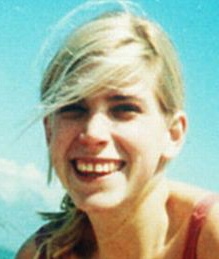
Estate agent Suzy Lamplugh was 25 when she disappeared without trace on July 28, 1986.

Her white Ford Fiesta was found that night outside a house for sale in Stevenage Road, Fulham. Her purse was in the car but the key was missing.

She had recorded her last appointment in her office diary – ”12.45 Mr Kipper – 37 Shorrolds Road O/S” – meaning she would meet the client outside the address.

Suzy’s body has never been found but she was declared dead in 1994 and the investigation remains open.

Several suspects have been put forward: Convicted killer John Cannan, who is said to have had the prison nickname ”Kipper” and was living in a hostel after serving an eight year sentence for rape; Ipswich serial killer Steve Wright, who worked on the QE2 at the same time as Lamplugh in 1982; and Michael Sams, who kidnapped an estate agent in Birmingham in 1992.

Cannan’s former girlfriend Gilly Paige claimed that he confessed to raping and killing the estate agent as they drove past Norton Barracks in Worcestershire. Searches of that area and others suggested to police were fruitless.

In November 2002 Scotland Yard said that Cannan was ”the only suspect” but there was not enough evidence to charge him with the murder. He was then serving a 35-year minimum term life sentence for the abduction, rape and murder of 29-year-old newlywed Shirley Banks in Bristol in 1987.

Speaking in 2006, Detective Superintendent Jim Dickie said there was evidence Cannan had been monitoring Suzy before her disappearance.
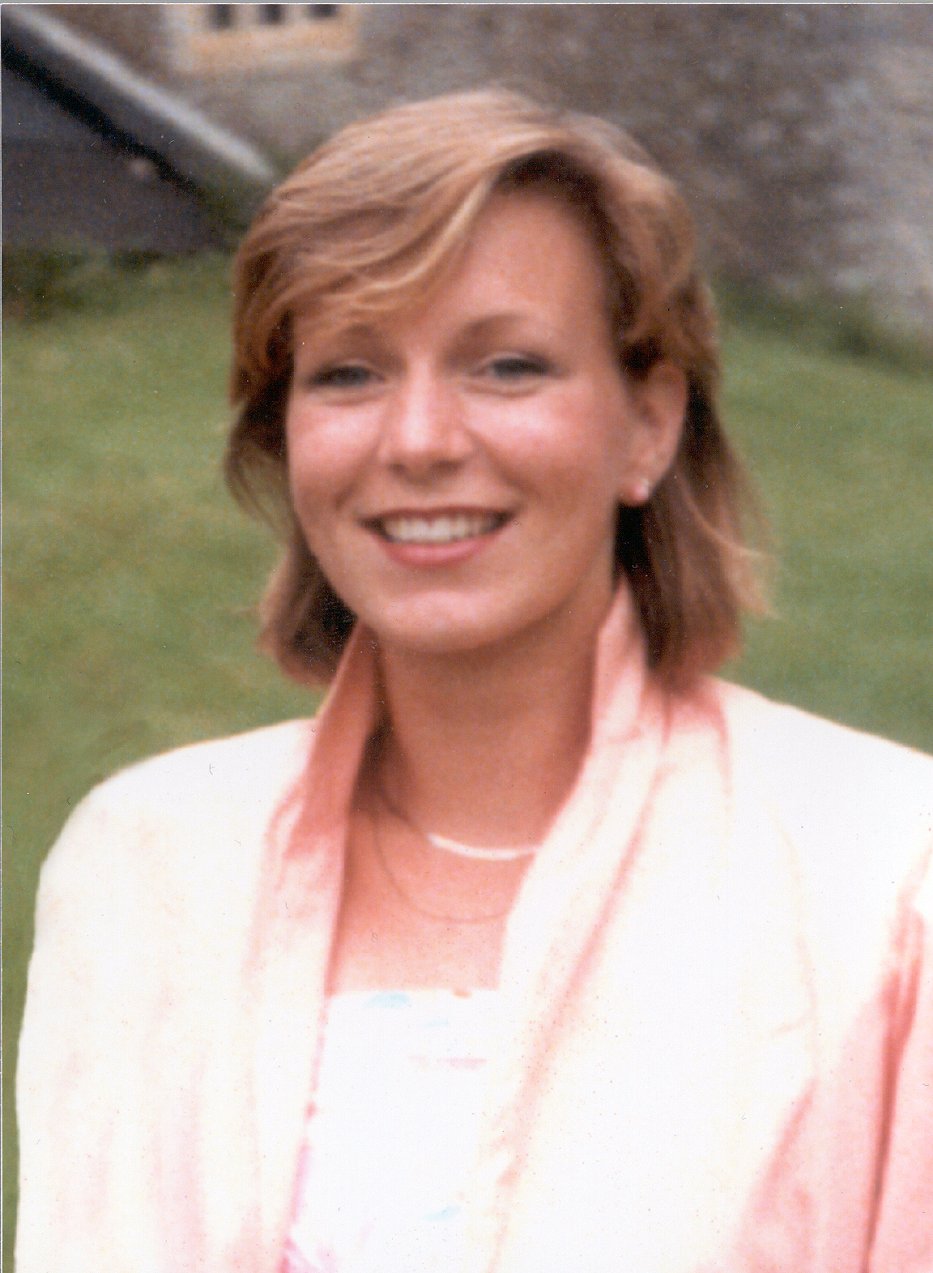
Suzy Lamplugh

The Metropolitan Police apologised publicly to Miss Lamplugh’s parents for faults in the original investigation, including a failure to follow up information from significant witnesses.

A driver of a black cab, who later positively identified Cannan, told police he took a man carrying a bottle of champagne to Shorrolds Road on that day in 1986. Witnesses also claimed to have seen a blonde woman arguing with a man in a black BMW in the area.

Deputy Assistant Commissioner Bill Griffiths said “It is a matter of great regret for all of us at the Metropolitan Police that significant opportunities were missed during the original inquiry.”

Police continued to investigate the case and in 2018 and 2019 searched property owned by Cannan’s mother in the West Midlands and open land in Worcestershire. No evidence was found.

A potential new lead was received in August 2019 when a witness reported seeing a man, disposing of a large bag in the Grand Union Canal in July 1986. However officers discovered that the part of the canal mentioned by the witness and the surrounding canal stretches had been extensively searched by the Met’s Marine Support Unit and London Fire Brigade Search Unit in September 2014 during an unrelated homicide investigation. That search did not reveal any items connected to the Suzy Lamplugh investigation.

In March 2021 the Metropolitan Police said it remained a “significant case” and that the investigation was ongoing.

We would urge anyone who believes they might know something about what happened to Suzy all those years ago to come forward. Whether you saw something that you thought was unconnected at the time, or you felt under pressure to protect someone you knew – it is not too late. The passage of time has not weakened our determination to seek justice and get the answers that the Lamplugh family continue to wait for. They have always been supportive of our efforts to make progress in the investigation, and they have shown remarkable strength despite the immense sadness they have endured over the years.

Detective Chief Inspector Rebecca Reeves, the senior investigating officer

Cannan died at HMP Full Sutton on 6 November 2024.

Suzy’s mother Diana Lamplugh set up the Suzy Lamplugh Trust in December 1986 to ”highlight the risks people face and to offer advice, action and support to minimise those risks.”

Diana received an OBE in 1992 but sadly died in August 2011 without seeing anyone brought to justice for her daughter”s murder.

She once told how Suzy had rung her the day before her disappearance. “She was all bubbly, telling me how she was doing this and that. I said, ‘Be careful, darling’. She replied: ‘No, life’s for living, mummy’. And I think she was right.”

________

Sources and further information:

The website of the Suzy Lamplugh Trust, which celebrated its 25th anniversary in 2011.

Timeline of the Lamplugh case (Guardian). Wikipedia ”Disappearance of Suzy Lamplugh”. Did Suzy have an affair with her killer? (Mail Online). Interview with criminologist Christopher Berry-Dee about links between Cannan and the Lamplugh case (Sunday Mercury). Lamplugh suspect linked to killer”s car 20 years on (Telegraph). We”re sure of Suzy Lamplugh”s killer (Observer). Police name man who killed Suzy Lamplugh (Telegraph). Obituary for Diana Lamplugh (Guardian).
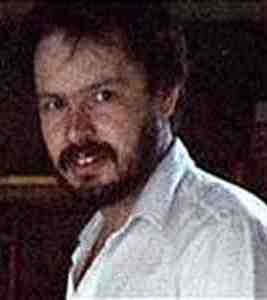
The Unsolved Murder of Daniel Morgan

The murder of private investigator Daniel Morgan remains one of London’s most notorious unsolved cases.

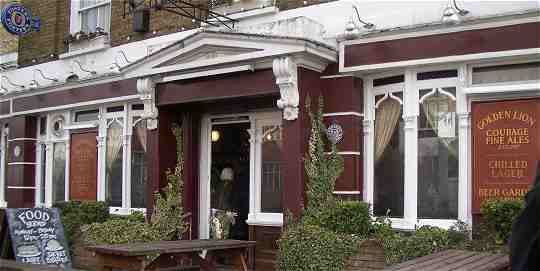
On March 10, 1987, the 37 year-old father-of-two was hacked to death with an axe outside the Golden Lion pub in Sydenham.

Why was he killed? His family, including brother Alastair, are convinced that Daniel was close to exposing a group of corrupt police officers, but six investigations have failed to provide a conclusive answer or bring his killers to justice.

Daniel Morgan

Daniel Morgan ran a detective agency called Southern Investigations. The night he was killed he had a 90-minute meeting with his business partner Jonathan Rees at the Golden Lion. At 9pm he left by a back entrance to get to the car park, a Rolex watch on his wrist and £1,100 in his pocket.

He was later found lying on the ground near his car with an axe embedded in the side of his head. The Rolex was missing but the cash remained.

The following month Rees, his brothers in law Garry and Glenn Vian, and Sid Fillery, one of the Catford police station detectives initially assigned to the case, were arrested, only to be released without charge.

At the inquest in April 1988, the bookkeeper at Southern Investigations alleged that Rees and Fillery planned the contract killing. By this time Fillery had retired from the police, and in 1989 he joined Southern Investigations as Rees’ new partner.

The pair went on to carry out work for a number of tabloid newspapers including the News of the World and are said to have provided the information for exposes of celebrities, politicans and royalty.

A second inquiry by Hampshire Police began on 24 June 1988 following a complaint by the Morgan family to Home Secretary Douglas Hurd. Rees was again arrested, but the charges were dropped.

Between June 1998 and May 1999 police monitored the offices of Southern Investigations as part of a third investigation. Although it did not assist the murder enquiry, it did provide evidence that Rees was in a plot to frame model Kim James with drugs to help her husband win custody of their son. In December 2000 he was jailed for six years at the Old Bailey for conspiracy to pervert the course of justice.

A fourth investigation began in 2002 but a year later the Crown Prosecution Service decided not to go ahead with a case against Rees and two others on the grounds of insufficient evidence.

Another flawed attempt began in 2006. Two years later Rees, Garry Vian, Glenn Vian and James Cook were charged with murder and Sidney Fillery was charged with perverting the course of justice.

It was expected the trial would take place in April 2009. Two years of legal wrangling over disclosure of evidence and police handling of witnesses followed. In February 2010 a judge stopped the case against Sidney Fillery after excluding the evidence of a key witness. The charges against Cook were dropped in November. The entire case collapsed in March 2011 after prosecutors accepted they could no longer guarantee that full disclosure of evidence could be made to the defence.

The Metropolitan Police have since admitted that the original investigation in 1987 was tainted by police corruption, without giving any details of that corruption.

Alastair Morgan commented at the end of the case: “We have encountered stubborn obstruction and worse at the highest levels of the Metropolitan police. We have found an impotent police complaints system, and we have met with inertia or worse on the part of successive governments. We have been failed utterly by all of the institutions designed to protect us.”

On 10 May 2013 the Home Secretary Theresa May announced an independent panel would look into the circumstances of the case. 

The remit of the panel involved addressing questions related to “police involvement in the murder, the role played by police corruption in protecting those responsible for the murder from being brought to justice and the failure to confront that corruption, the incidence of connections between private investigators, police officers and journalists at the News of the World and other parts of the media and alleged corruption involved in the linkages between them.”

Eight years later, on 15 June 2021, the panel’s report was finally published. It found that the Metropolitan Police’s failure to properly investigate the case and its attempt to cover up its failings amounted to “a form of institutional corruption”. It also criticised Met Commissioner Cressida Dick over delays in providing documents to the panel and raised concerns about links between police officers, “individuals linked to crime” and newspapers, particularly the News of the World (which was a major client of Southern Investigations between 1987 and 1989). The panel concluded that the Met Police never seriously investigated the theory that Morgan was murdered because he was about to expose police corruption.

The family of Daniel Morgan has suffered grievously as a consequence of the failure to
bring his murderer or murderers to justice, the unwarranted assurances which they were given, the misinformation which was put into the public domain, and the denial of the failings in investigation, including failing to acknowledge professional incompetence, individuals’ venal behaviour, and managerial and organisational failures.

Statement of the Panel issued by Baroness Nuala O’Loan

In July 2023, the Metropolitan Police Commissioner Sir Mark Rowley issued an apology to the family of Daniel Morgan after agreeing to settle a civil claim and make an admission of liability in respect of the conduct of his officers in response to the murder.

I unequivocally and unreservedly apologise for the failure of the Metropolitan Police Service to bring those responsible for the murder of Daniel Morgan to justice. From the earliest stages, his family have been repeatedly and inexcusably let down by the Metropolitan Police. This case has been marred by a cycle of corruption, professional incompetence, and defensiveness that has repeated itself over and over again. Daniel Morgan’s family were given empty promises and false hope as successive investigations failed and the Metropolitan Police prioritised its reputation at the expense of transparency and effectiveness.

Sir Mark Rowley

The Met Police said that “there still remains a possibility of solving this murder” and confirmed it was still carrying out a forensic review of exhibits linked to the case in the hope that advances in DNA and forensic technology might recover new evidence.

A £50,000 reward is on offer for information leading to the conviction of those responsible for the murder. Contact police on 0203 276 7816 or Crimestoppers on 0800 555 111.

Note: This case is included on our map of historical murders in London

Links and further reading:

The website set up by Daniel Morgan’s family www.justice4daniel.org

Daniel’s brother was also involved in the podcast series (and book) Untold: The Daniel Morgan Murder Exposed.

Two other books cover the case in depth: Bent Coppers: The inside story of Scotland Yard’s battle against police corruption (Graeme McLagan) and Untouchables: Dirty Cops, Bent Justice and Racism in Scotland Yard (Michael Gillard and Laurie Flynn).

Daniel Morgan murder, 24 years, five police enquiries but no justice‘, Guardian, March 11, 2011.

Original pictures of the murder scene in 1987 can be found in ‘Corrupt police are blamed for £50m collapse of murder case‘, Daily Mail, March 11, 2011.

Murder trial collapse exposes News of the World links to police corruption‘, ‘Jonathan Rees: private investigator who ran empire of tabloid corruption‘, Guardian, March 11, 2011.

Phone Hacking Scandal: Rees obtained information using dark arts‘, Guardian, June 8, 2011.

News of the World spied on detective during murder enquiry,’ Telegraph, July 5, 2011.

The website of the Daniel Morgan Independent Panel, which was set up in May 2013 but has still not published its report.

Support murdermap

We rely on subscriptions and donations to fund the website.
Sign up for just £5 per year.

Searching for the family of a murder victim: Christopher Ainscough

Christopher Ainscough was 50 years old when he was found dead at his home in Windmill Court, Shoot-Up Hill, Kilburn, in December 1983.

He had suffered head injuries at some point between the 2 and 5 December.

The Metropolitan Police launched a murder investigation but were unable to identify his attacker.

Tragically they were also never able to locate his family.

The case remained unsolved over the following years but in late 2020 someone claiming to know about the murder attended a police station.

On 2 February 2021 Anthony Kemp, 58 (13.05.62), of no fixed address, was arrested and charged with murder.

Police are still appealing for information from anyone who knew Christopher, who was born in Dublin, or his family.

Christopher Ainscough

Detective Chief Inspector Simon Harding of the Specialist Crime Command said: “It is nearly 40 years since Christopher Ainscough was murdered and given the significant development in this investigation, we are now putting renewed vigour into identifying his next of kin so we can inform them of this latest news.

“If you knew Christopher or his family circumstances then please get in touch – we want to let his family to know that Christopher remains at the centre of our thoughts and we are doing all we can to get justice for him and his loved ones.”

Anyone that can assist is asked to call the police incident room on 020 8721 4205.

The murder of Rachel Nickell

The murder of Rachel Nickell remained unsolved for 16 years because of a bungled police investigation that focused on an innocent man. Rachel, 23, was stabbed to death as she walked on Wimbledon Common with her two year-old son and pet dog on 15 July 1992. Her body was found…

You must be a paid subscriber to view this page - we rely on donations to keep the website going.

For £5 a year, subscribers receive the following benefits:

Sign up here, or Login if you are already registered.


An unprovoked attack: The unsolved murder of Ricky Smith

Ricky Smith, 25, was stabbed to death in front of his partner in an unprovoked attack in Highbury, north London, on Friday, 3 October 1997.

The couple were walking home from a kebab house when they were approached by the killer in Highbury Park near Hamilton Park just before midnight.

Ricky was immediately stabbed in the chest and died on arrival at Whittington Hospital. He had just started a new career as a specialist floor fitter and was described as a devoted father of a ten-year-old girl and a 14-month-old boy. 

His murder remains unsolved and detectives said it appeared to be “a completely unprovoked attack” by an attacker who “did not utter a word before producing a knife and stabbing Ricky”.

The suspect ran into Aubert Park, Avenell Road and then Conewood Street opposite the old Arsenal football ground.

The murder weapon – a lock knife with a three and a half inch blade and a yellow £9.95 price sticker attached – was found in a back garden garden on the junction with Aubert Park and Aubert Road..

The lockknife used in the attack

Detectives found a blue baseball cap and a ‘Chicago Bulls’ jacket inside two carrier bags – one green with a ‘Fenwicks’ logo and the other white with a ‘Wilkies’ logo – discarded in Conewood Street.

In October 2011 new forensic analysis of the clothing allowed officers to link the murder to the stabbing of another man two hours earlier in Harlesden, northwest London.

At around 9.15pm on 3 October 1997 Juan Marais walked out of Kensal Green station and headed to a party with a carrier bag containing cans of beer. As he walked along College Road a man walking behind him asked for the time before pulling out a knife and stabbing him in the chest and abdomen. The man then picked up the victim’s bag and walked away.

Mr Marais suffered serious injuries but went on to make a full recovery.

It was a long time ago but I can clearly remember what happened. I’d moved to London from South Africa and I’d been walking to a friends’ house for a BBQ when a guy asked me the time. As I looked down at my watch he just went for me. At first I thought I’d been punched but as I got away I looked down and saw the blood all down my shirt and my jeans. I made it to an off-license where the shop owner looked at my wounds and tried to stop the bleeding with her hands. I know she kept talking to me but I was finding it so hard to breath I was starting to panic. I know I was very lucky to have survived. Lucky that God saved me and gave me another chance. It’s amazing that after all this time my case has been linked to Ricky’s. I was just 21 at the time and Ricky was only 25. I had another chance at life but he didn’t get the same chance. I’m hoping that by speaking out we can finally achieve some closure for Ricky’s family.

Juan Marais, speaking in 2011

The suspect in both attacks is described as a tall black man aged between 18 to 30 years.

In September 2012 the case was featured on the BBC’s Crimewatch programme. Detectives revealed that a man went to the scene the day after Ricky’s murder and asked about the items abandoned in Conewood Street. He said he would contact police but never did.

During a further appeal in 2022 detectives said they were confident that they had recovered the DNA profile of the attacker and appealed for help from the public.

Detective Inspector Will Reynolds said: “Unfortunately there has been no match on our database or any international systems, meaning he does not appear to have come to police attention since the time of these offences.

“It is highly likely that the individual who committed these crimes was a violent man and it is extremely unusual that he does not appear to have re-offended. We therefore believe that after he carrying out these horrific crimes, he disappeared, very likely leaving the UK and not returning.

“We are asking the public, especially those who are or were living in the area of Highbury or Kensal Green, to think about whether they knew of anyone who simply seemed to vanish in 1997. The suspect is a black male who would have been aged between 25 and 35 at the time of the incident.”

The Metropolitan Police is offering a reward of £25,000 for information leading to a prosecution. Contact the police on 020 8785 8267 or Crimestoppers anonymously on 0800 555 111.

There is not a day that goes by when we don’t think about Ricky. He’s in our thoughts every moment and it’s almost impossible to imagine that it all happened so many years ago.

Our grandchildren have grown up without their dad and we want to know why this has happened. We still go over and over the events of that night and can make no sense of it. Ricky was a decent and hard-working man with lovely family and friends. He didn’t deserve to have his life taken away and his children didn’t deserve to grow up without him by their side.

Ricky’s father, Keith Smith

Support murdermap

We rely on subscriptions and donations to fund the website.
Sign up for just £5 per year.