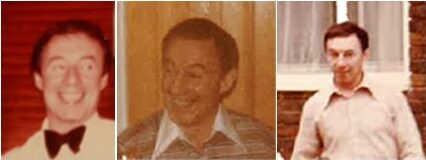
Christopher Ainscough was 50 years old when he was found dead at his home in Windmill Court, Shoot-Up Hill, Kilburn, in December 1983.
He had suffered head injuries at some point between the 2 and 5 December.
The Metropolitan Police launched a murder investigation but were unable to identify his attacker.
Tragically they were also never able to locate his family.
The case remained unsolved over the following years but in late 2020 someone claiming to know about the murder attended a police station.
On 2 February 2021 Anthony Kemp, 58 (13.05.62), of no fixed address, was arrested and charged with murder.
Police are still appealing for information from anyone who knew Christopher, who was born in Dublin, or his family.
Christopher Ainscough
Detective Chief Inspector Simon Harding of the Specialist Crime Command said: “It is nearly 40 years since Christopher Ainscough was murdered and given the significant development in this investigation, we are now putting renewed vigour into identifying his next of kin so we can inform them of this latest news.
“If you knew Christopher or his family circumstances then please get in touch – we want to let his family to know that Christopher remains at the centre of our thoughts and we are doing all we can to get justice for him and his loved ones.”
Anyone that can assist is asked to call the police incident room on 020 8721 4205.
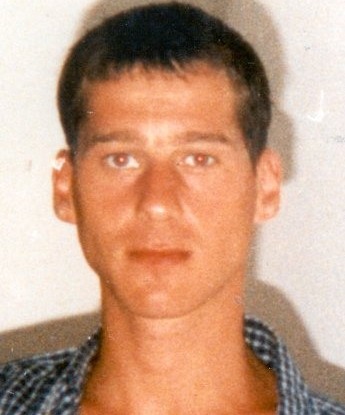
Ricky Smith, 25, was stabbed to death in front of his partner in an unprovoked attack in Highbury, north London, on Friday, 3 October 1997.
The couple were walking home from a kebab house when they were approached by the killer in Highbury Park near Hamilton Park just before midnight.
Ricky was immediately stabbed in the chest and died on arrival at Whittington Hospital. He had just started a new career as a specialist floor fitter and was described as a devoted father of a ten-year-old girl and a 14-month-old boy.
His murder remains unsolved and detectives said it appeared to be “a completely unprovoked attack” by an attacker who “did not utter a word before producing a knife and stabbing Ricky”.
The suspect ran into Aubert Park, Avenell Road and then Conewood Street opposite the old Arsenal football ground.
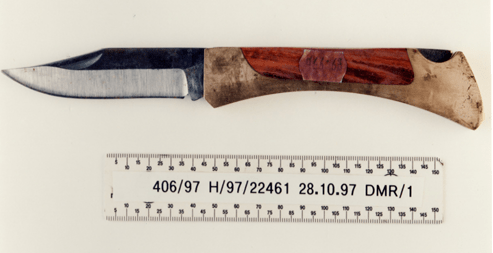
The murder weapon – a lock knife with a three and a half inch blade and a yellow £9.95 price sticker attached – was found in a back garden garden on the junction with Aubert Park and Aubert Road..
The lockknife used in the attack
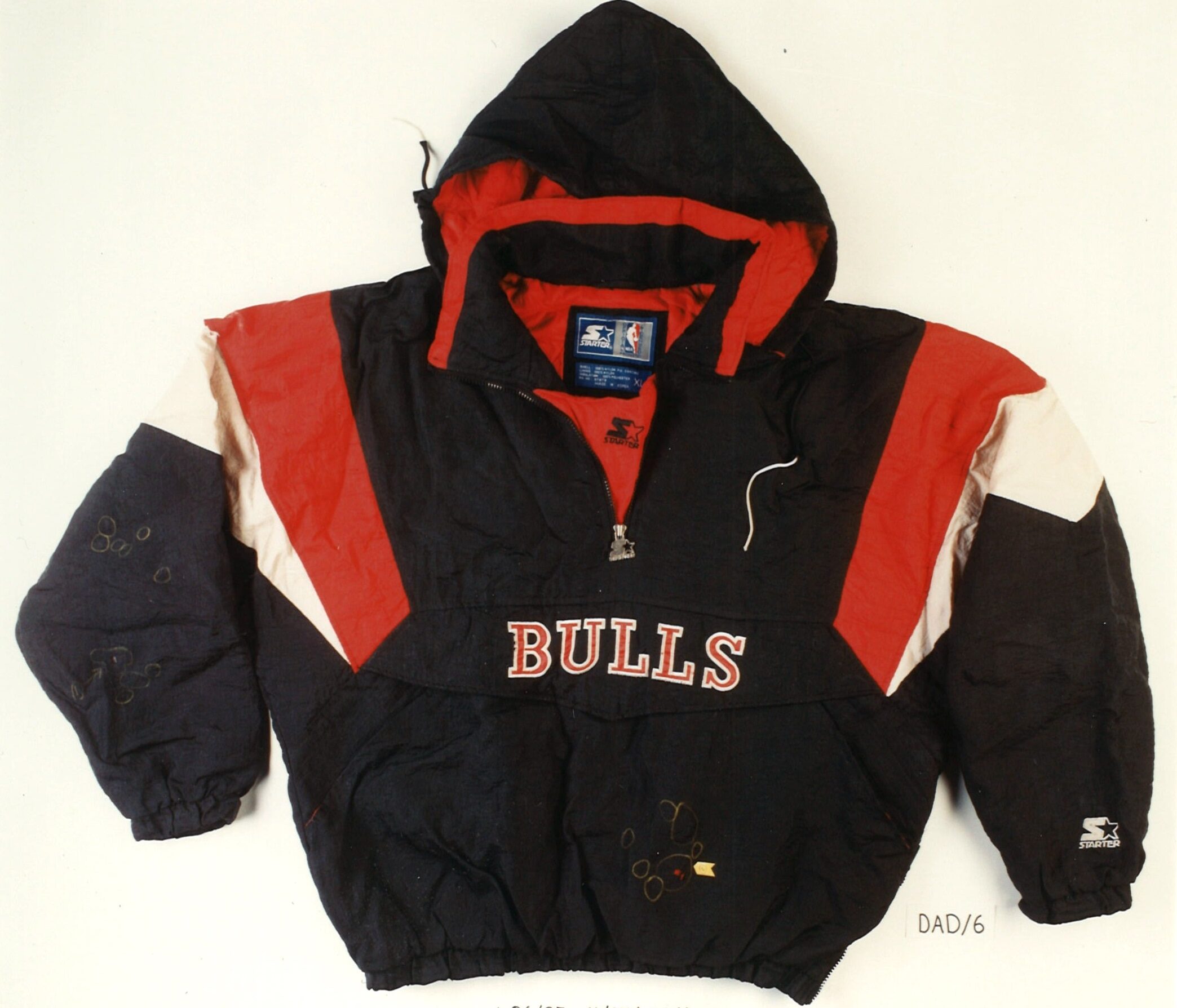
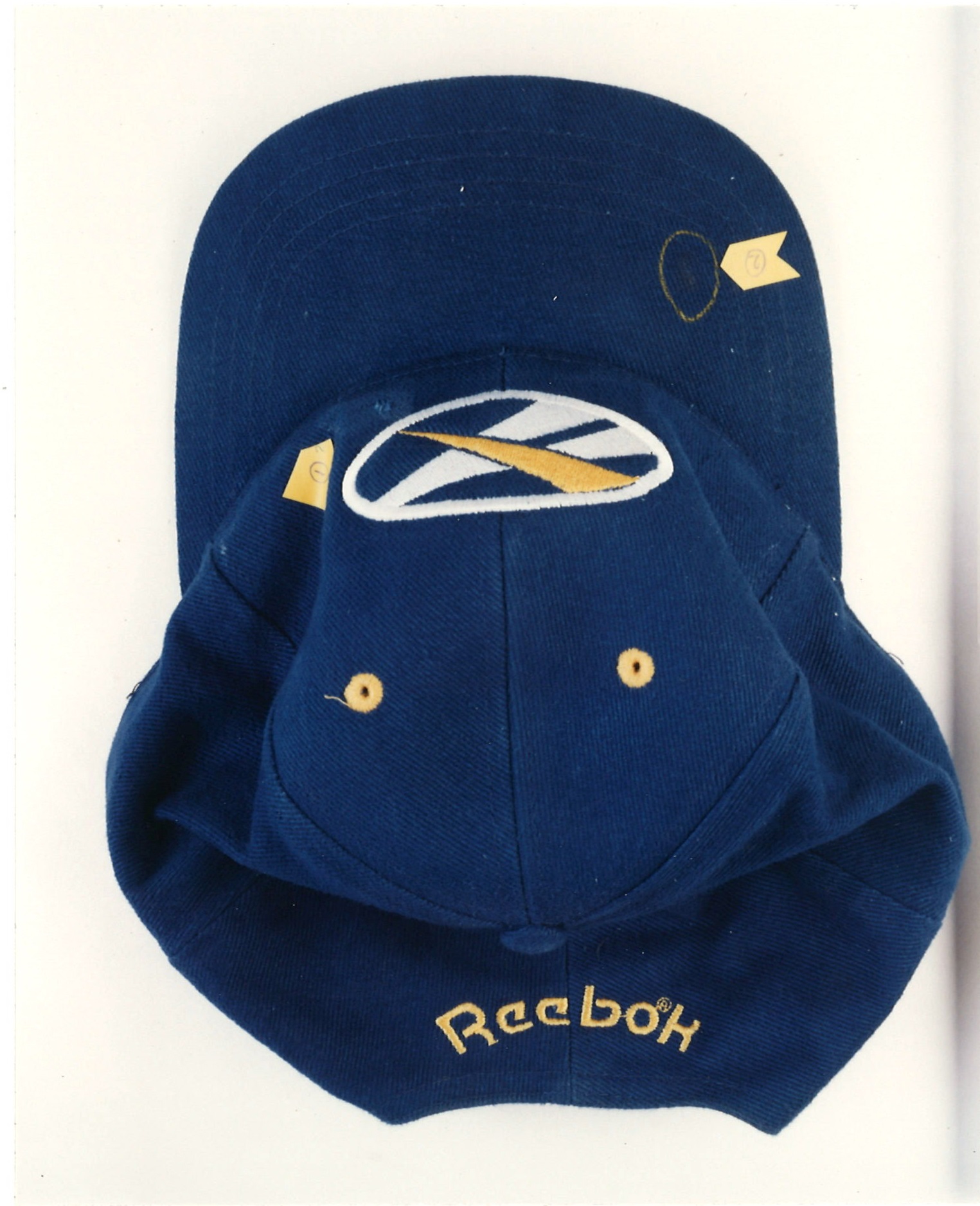
Detectives found a blue baseball cap and a ‘Chicago Bulls’ jacket inside two carrier bags – one green with a ‘Fenwicks’ logo and the other white with a ‘Wilkies’ logo – discarded in Conewood Street.
In October 2011 new forensic analysis of the clothing allowed officers to link the murder to the stabbing of another man two hours earlier in Harlesden, northwest London.
At around 9.15pm on 3 October 1997 Juan Marais walked out of Kensal Green station and headed to a party with a carrier bag containing cans of beer. As he walked along College Road a man walking behind him asked for the time before pulling out a knife and stabbing him in the chest and abdomen. The man then picked up the victim’s bag and walked away.
Mr Marais suffered serious injuries but went on to make a full recovery.
It was a long time ago but I can clearly remember what happened. I’d moved to London from South Africa and I’d been walking to a friends’ house for a BBQ when a guy asked me the time. As I looked down at my watch he just went for me. At first I thought I’d been punched but as I got away I looked down and saw the blood all down my shirt and my jeans. I made it to an off-license where the shop owner looked at my wounds and tried to stop the bleeding with her hands. I know she kept talking to me but I was finding it so hard to breath I was starting to panic. I know I was very lucky to have survived. Lucky that God saved me and gave me another chance. It’s amazing that after all this time my case has been linked to Ricky’s. I was just 21 at the time and Ricky was only 25. I had another chance at life but he didn’t get the same chance. I’m hoping that by speaking out we can finally achieve some closure for Ricky’s family.
Juan Marais, speaking in 2011
The suspect in both attacks is described as a tall black man aged between 18 to 30 years.
The jacket worn by the killerHat dumped near scene
In September 2012 the case was featured on the BBC’s Crimewatch programme. Detectives revealed that a man went to the scene the day after Ricky’s murder and asked about the items abandoned in Conewood Street. He said he would contact police but never did.
During a further appeal in 2022 detectives said they were confident that they had recovered the DNA profile of the attacker and appealed for help from the public.
Detective Inspector Will Reynolds said: “Unfortunately there has been no match on our database or any international systems, meaning he does not appear to have come to police attention since the time of these offences.
“It is highly likely that the individual who committed these crimes was a violent man and it is extremely unusual that he does not appear to have re-offended. We therefore believe that after he carrying out these horrific crimes, he disappeared, very likely leaving the UK and not returning.
“We are asking the public, especially those who are or were living in the area of Highbury or Kensal Green, to think about whether they knew of anyone who simply seemed to vanish in 1997. The suspect is a black male who would have been aged between 25 and 35 at the time of the incident.”
The Metropolitan Police is offering a reward of £25,000 for information leading to a prosecution. Contact the police on 020 8785 8267 or Crimestoppers anonymously on 0800 555 111.
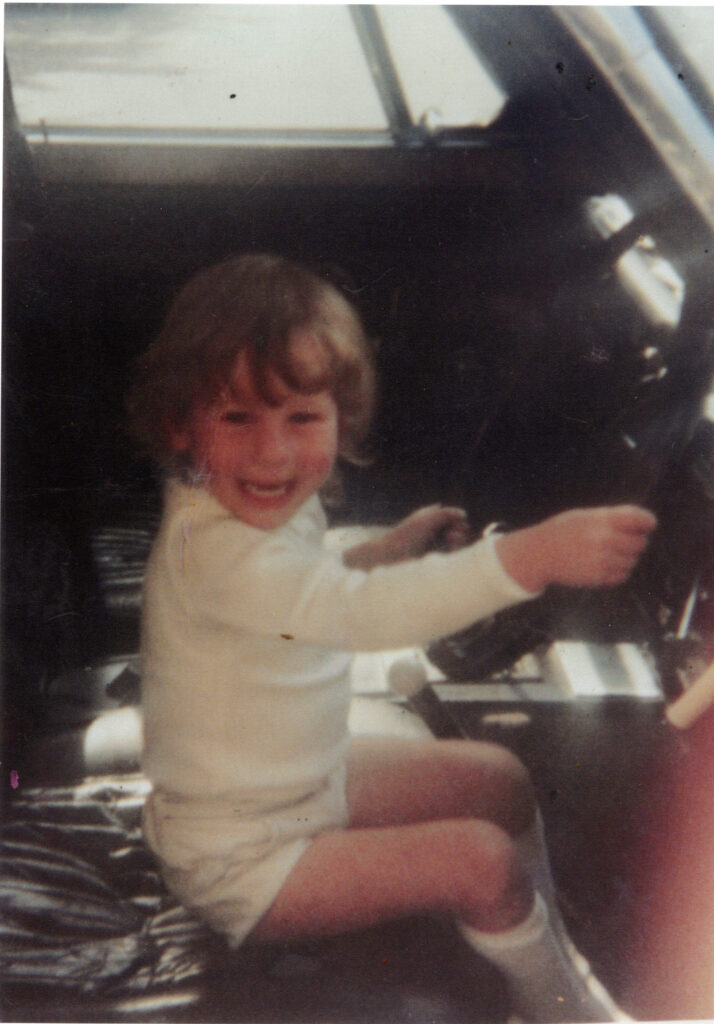
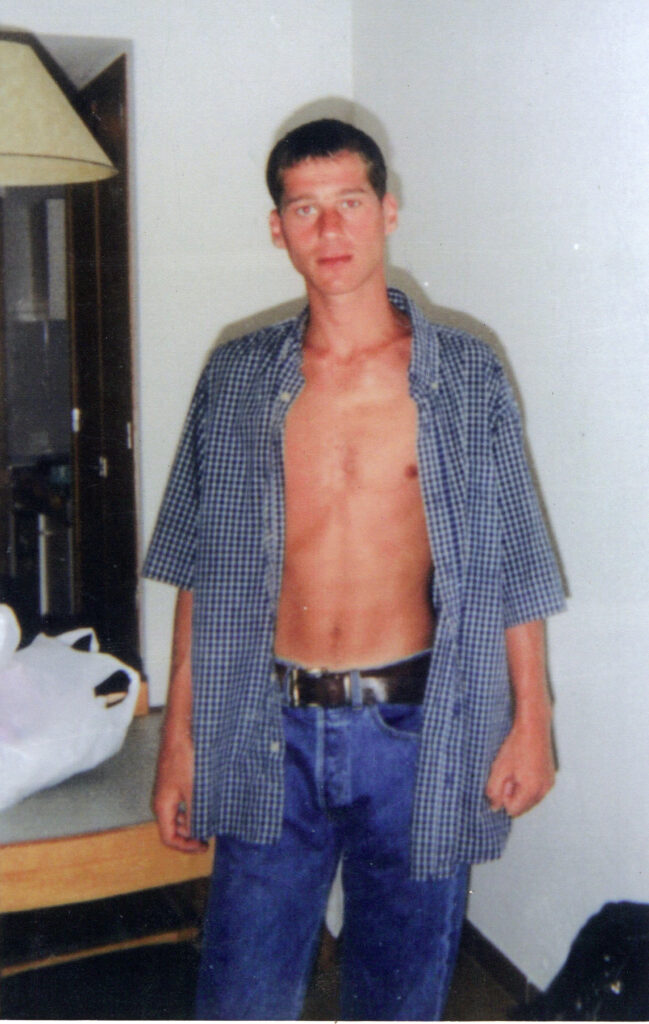
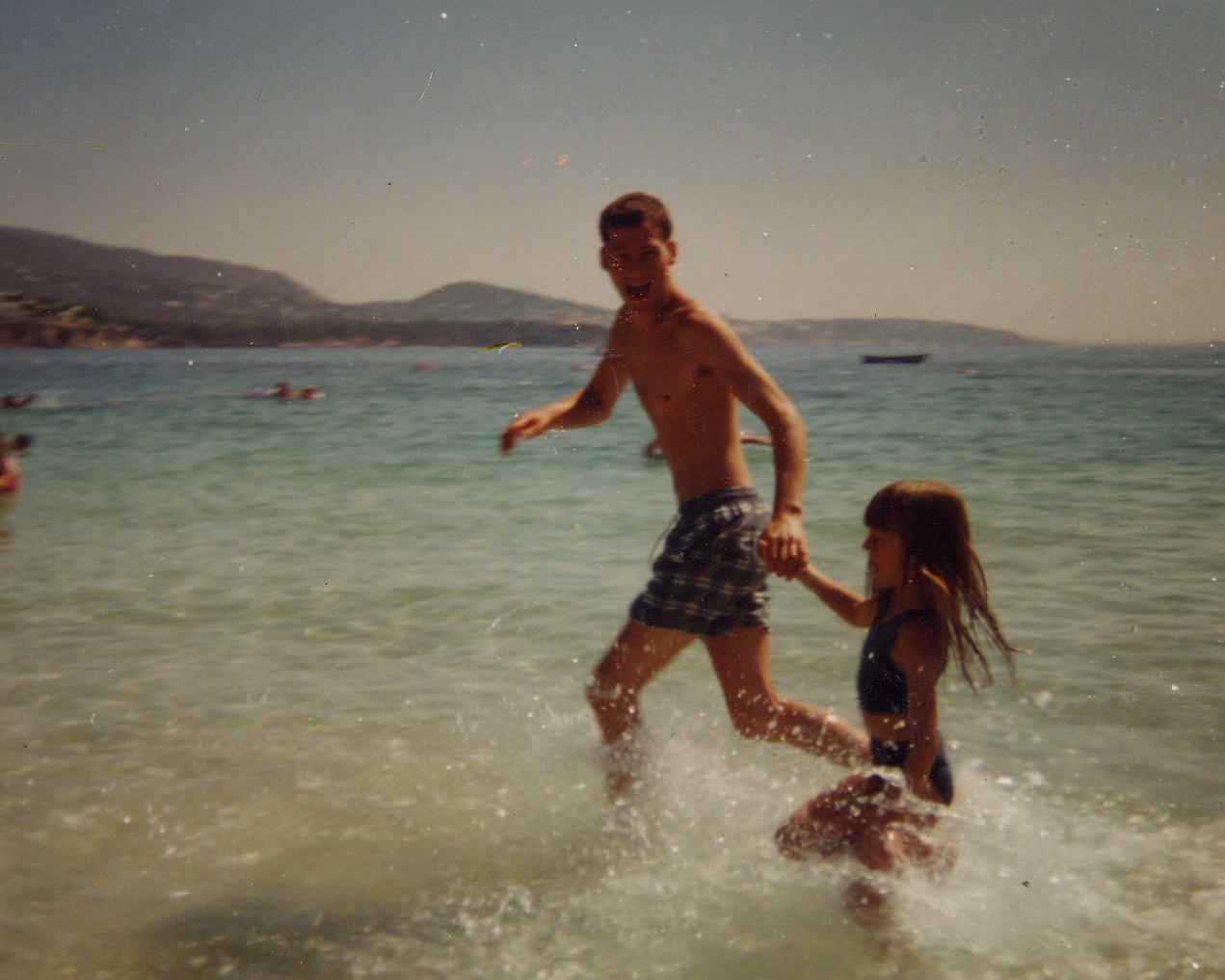
Ricky as a childRicky SmithRicky with his daughter
There is not a day that goes by when we don’t think about Ricky. He’s in our thoughts every moment and it’s almost impossible to imagine that it all happened so many years ago.
Our grandchildren have grown up without their dad and we want to know why this has happened. We still go over and over the events of that night and can make no sense of it. Ricky was a decent and hard-working man with lovely family and friends. He didn’t deserve to have his life taken away and his children didn’t deserve to grow up without him by their side.
Ricky’s father, Keith Smith
Support murdermap
We rely on subscriptions and donations to fund the website. Sign up for just £5 per year.
Jack the Ripper has become the most famous serial killer in the world after spreading terror throughout London in the last years of the 19th century.
His crimes have been pored over by untold numbers of experts and amateur sleuths – yet nobody has ever convincingly unmasked this notorious figure.
Instead, conspiracy theories, myths and fantastical speculation have concealed the chilling facts of the case.
So did ‘Jack the Ripper’ really exist? Or is he a media invention?
Most people believe that one man was behind at least four murders. Others think there were possibly eight victims of the same killer.
A Metropolitan Police investigation collected eleven separate murders between 3 April 1888 and 13 February 1891 under the title of the “Whitechapel murders”.
So where to start? The first recognised ‘Ripper’ killing took place in the early hours of Friday, 31 August, 1888.
Mary Ann Nichols, known as Polly, was 43 when she was attacked in Buck’s Row (now Durward Street) in Whitechapel.
Her body was first discovered by a delivery driver at around 3.45am in the entrance to a stableyard. Her throat had been cut twice, severing the blood vessels on both side of the neck.
She also had a deep jagged wound across the left side of the stomach and three or four similar cuts on the right side.
Eight days later a second woman, Annie Chapman, 47, was discovered in the back yard of 29 Hanbury Street, Spitalfields, at around 6am.
Again her throat had been severed twice with a sharp knife, so deeply it had cut into the spine.
The killer had also slashed open the abdomen, cut away the intestines and placed them on the victim’s shoulder. Her uterus had been removed along with part of the bladder.
Such was the surgical skill used that the doctor who performed the postmortem believed it would have taken at least 15 minutes and an in-depth knowledge of anatomy.
On 27 September the Central News agency received a letter signed ‘Jack the Ripper’. It is now thought to have been written by a journalist desperate for a story.
The note began ‘Dear Boss, I keep on hearing the police have caught me but they wont fix me just yet. I have laughed when they look so clever and talk about being on the right track.’
Referring to the common belief that the women were killed because they were prostitutes, it added: “I am down on whores and I shant quit ripping them till I do get buckled. Grand work the last job was. I gave the lady no time to squeal…. The next job I do I shall clip the ladys ears off and send to the police officers just for jolly wouldn’t you.”
Three days later on the Sunday morning two women were murdered within the space of 45 minutes, although there is some doubt as to whether they were the work of one man.
Elizabeth Stride, a 45 year-old woman of Swedish origin who had a history of prostitution, was killed in Dutfield’s Yard of Berner Street (now Henriques Street). Her throat had been cut once from the left although there was no other mutilation.
One witness, known as Israel Schwartz, claimed to have seen one man throw the victim down on the street while another watched, lighting his pipe. Mr Schwartz walked off after being spotted by the second man.
Louis Diemschutz, jewel salesman, discovered the body when he drove his cart into the yard at around 1am, possibly interrupting the Ripper before he could finish.
Over in Mitre Square in the City of London, the body of 46 year-old Catherine Eddowes was found by a policeman in Mitre Square.
Her throat had been cut, her abdomen slashed open and her intestines placed over the right shoulder. Her left kidney and most of the uterus had been removed.
In contrast to other victims, her face was also mutilated: there were cuts through both eyelids, the bridge of the nose, tip of the nose, upper lip, and both cheeks.
Part of her bloodspattered apron was found in nearby Goulston Street, Whitechapel, below graffiti on the wall reading: ‘The Juwes are the men that will not be blamed for nothing.’
The next day a postcard was sent to the Central News agency referring to a ‘double event.’
More disturbingly about two weeks later a parcel containing half a human kidney preserved in wine was sent to George Lusk, the head of a vigilance committee in Whitechapel.
A note, which claimed the organ had been taken from Catherine Eddowes, began: ‘From hell…
“I send you half the Kidne I took from one woman and prasarved it for you tother piece I fried and ate it was very nise….”
It was signed ‘Catch me when you can.’
Finally on Friday, 9 Novembey, Mary Jane Kelly, believed to be a 25 year-old Irish woman, was murdered in her room at 13 Miller’s Court, Dorset Street, Spitalfields.
She was last seen at around 2am with a man described as of Jewish appearance, with a large dark cloak, felt hat, white collar and black tie, light boots and a gold seal hanging from his waistcoat.
Her body was discovered when the rent collector arrived at 10.45am and looked through the window.
This time the killer had enough time to not only cut her throat but completely disembowel her, cut off the breasts and mutilate the face beyond recognition.
The uterus, kidneys and one breast were found under her head and the other breast by her right foot. The liver had been placed between her feet, the intestines on her right side and her spleen on her left. Flaps of skin taken from her stomach and thigh were placed on the bedside table. Her eyebrows, nose, cheeks and ears had been partly cut off.
Her heart had been removed and taken away from the scene.
All five murders were carried out at night and each one increased in violence except that of Stride.
Although there were four other ‘Whitechapel murders’ there are significant differences with the so-called “canonical” murders. It is believed the killer suddenly stopped, either having died, emigrated or been incarcerated.
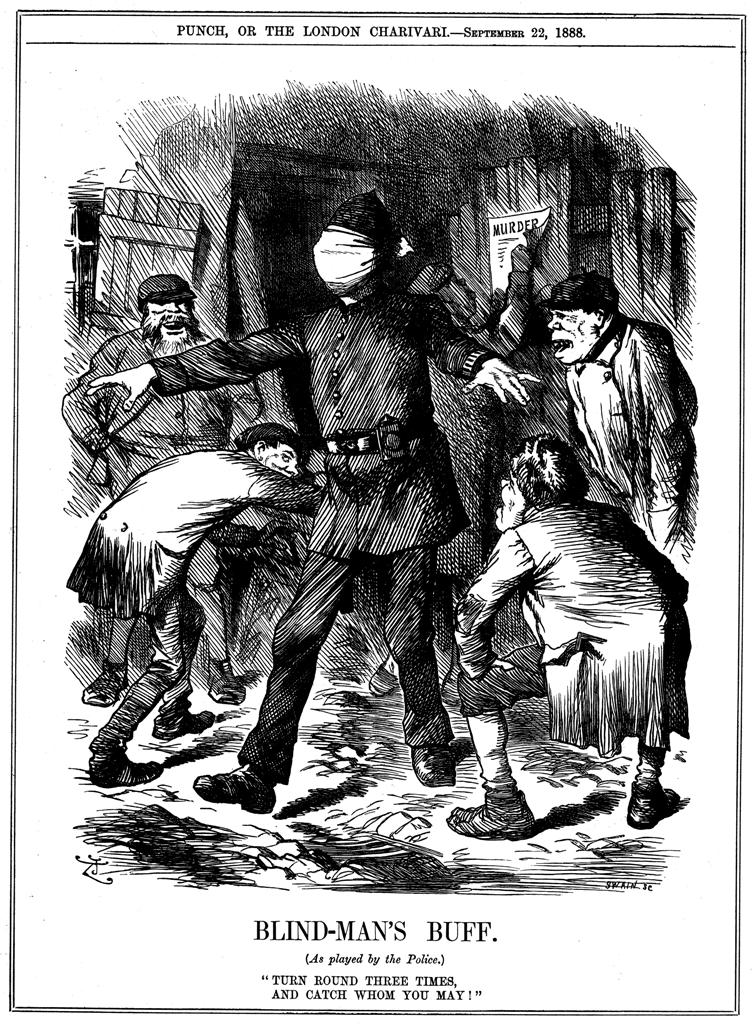
A contemporary illustration of the police inability to catch ‘Jack the Ripper’
While several suspects have been suggested, including even Prince Albert and the painter Walter Sickert, neither the original police investigation nor later research has unearthed conclusive evidence pointing to a single candidate.
Despite, or possibly because of, the failure to catch the culprit, the killings created an international media sensation in the newspapers of the time.
Even now, after over a century, he remains one of the most notorious figures in history.
On 27 July 1888 a two-year-old girl was left at the Royal Free Hospital in central London. The child’s name was Alice Bowden, but she was already dead. Her body was so thin an emaciated that she weighed only 8.5lbs, when a child of that age would normally weigh at…
You must be a paid subscriber to view this page - we rely on donations to keep the website going.
For £5 a year, subscribers receive the following benefits:
On the evening 16th May 1888, three boys were playing football in the street in Queen’s Park, northwest London. As usually happens, the ball ended up going over the fence into a resident’s garden and one of the boys entered through the gate to go and retrieve it. It was…
You must be a paid subscriber to view this page - we rely on donations to keep the website going.
For £5 a year, subscribers receive the following benefits: